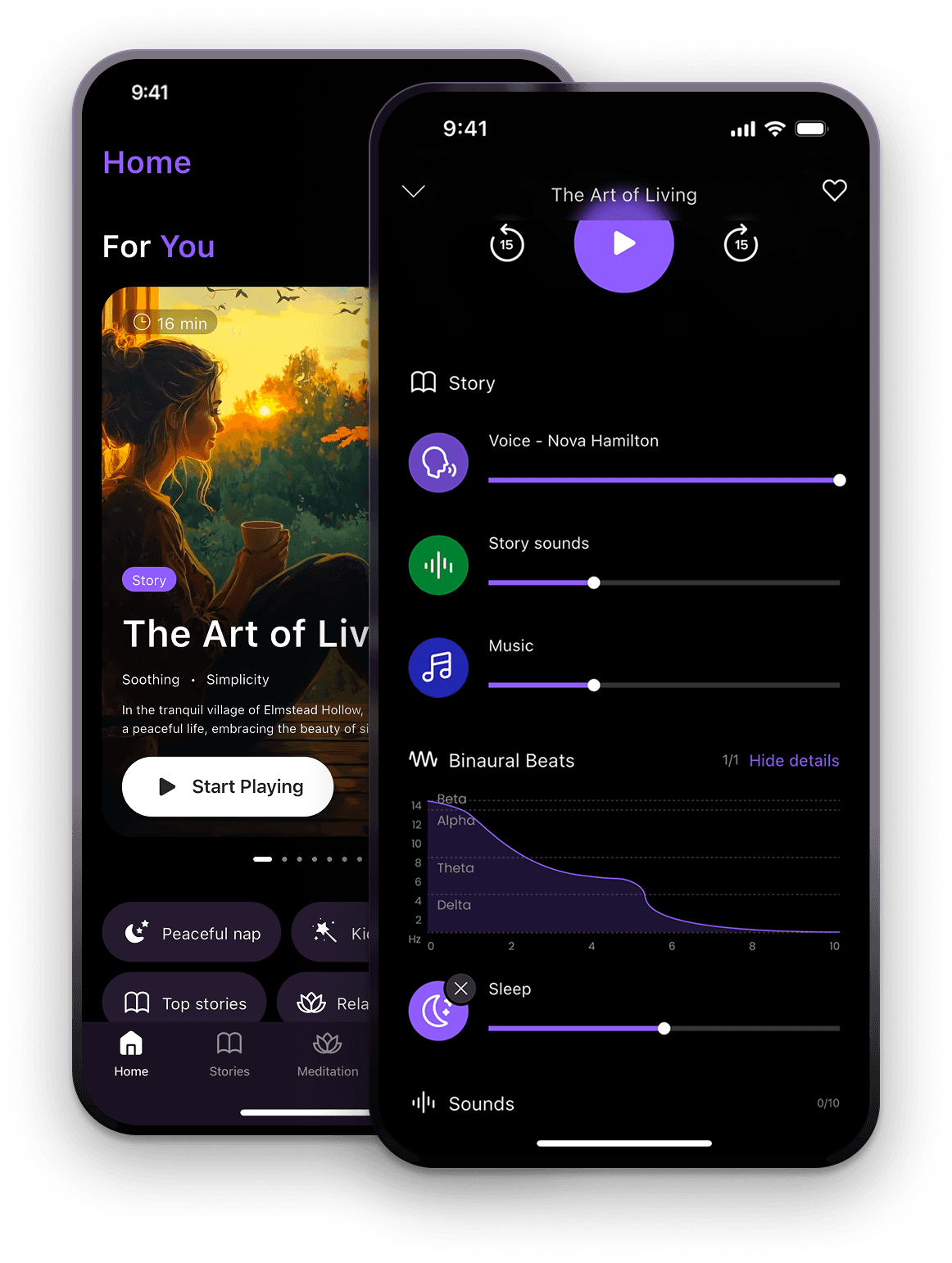
Unlock the full experience
Get full access to stories, meditations, soothing sounds, and binaural beats with our plus+ Subscription.
Start your 7-day free trial now




7-days free
Start your 7-day free trial now
7-days free
Blog / The Role of Magnesium in Sleep Quality
Unlock deeper rest with a mineral your body already depends on.
If you’re someone who tracks sleep data, experiments with recovery tools, or tweaks your nightly routine for maximum performance, magnesium has likely caught your attention. This essential mineral plays a surprisingly powerful role in supporting high-quality sleep. For the Sleep Optimizer, understanding how magnesium works—and how to use it effectively—can lead to measurable improvements in relaxation, recovery, and overnight restoration.
Magnesium isn’t just another supplement trend. It’s a vital mineral involved in over 300 biochemical reactions, many directly tied to your nervous system and sleep-wake cycle. When levels are low, the body struggles to unwind both mentally and physically.
Here’s how magnesium contributes to deeper rest:
It calms the nervous system. Magnesium regulates neurotransmitters like GABA, the chemical responsible for slowing down brain activity. Higher GABA activity = a quieter mind, fewer racing thoughts, and easier transition into sleep.
It relaxes muscles and reduces tension. If you’re stiff after long workdays, workouts, or stress, magnesium helps your muscles release built-up tension. This physical relaxation signals the brain that it's safe to wind down.
It supports melatonin production. Melatonin, the hormone that guides your sleep-wake cycle, depends on magnesium for proper synthesis. Adequate magnesium = smoother melatonin rhythm = more predictable sleep.
It may reduce nighttime awakenings. Studies suggest magnesium helps regulate cortisol and stabilize the heart rate, contributing to fewer mid-sleep disruptions.
Even slight magnesium deficiency can create a surprising ripple effect:
Because modern diets, stress, and caffeine use can deplete magnesium, many people unknowingly operate at suboptimal levels.
Not all magnesium types work the same. For sleep optimization, these are the most effective:
✓ Magnesium Glycinate. The gold standard for sleep. Gentle on the stomach and highly absorbable. Helps calm the nervous system.
✓ Magnesium L-Threonate. Known for crossing the blood-brain barrier, supporting cognitive relaxation and mental clarity before bed.
✓ Magnesium Malate (evening recovery). Useful if you deal with muscle soreness or fatigue; supports relaxation without drowsiness.
Avoid: Magnesium oxide Low absorption and often used as a laxative.
💡 Ideal Timing: 1–2 hours before bed to align with your body’s natural wind-down cycle.
💡 Dosage: Most adults benefit from 200–400 mg daily, but always follow product instructions or medical guidance.
💡 Pairing Tip: Combine magnesium with calming soundscapes—like ocean waves, gentle flutes, or white noise—to deepen relaxation. Magnesium relaxes your body; soundscapes relax your mind.
At Night Whisper, magnesium-inspired soundscapes (like gentle ambient hums, deep resonant tones, or rhythmic breathing patterns) can amplify the calming effect magnesium already has on your nervous system.
This pairing works because:
A powerful combination for deep, restorative rest.
Magnesium may help you if you:
If you're unsure, a healthcare provider or a simple blood test can assess your magnesium levels.
Magnesium is one of the most reliable, research-backed tools for improving sleep quality. For the Sleep Optimizer who values measurable improvements, consistent magnesium intake—paired with a calming nighttime soundscape—can support deeper recovery, smoother transitions into sleep, and reduced nighttime disturbances.
Sleep isn’t just rest—it’s maintenance for your body and mind. And magnesium is a quiet but powerful tool in keeping that system running at its best.
Share article